
With around 30,000 hikers attempting the National Three Peaks Challenge each year, it’s said that only 40% complete it within the 24-hour limit.
Of the 60% who don’t succeed, a considerable chunk are simply ill-prepared hikers who underestimate just how difficult the undertaking is.
Let’s get one thing straight, the Three Peaks Challenge is TOUGH.
The three mountains of Ben Nevis, Scafell Pike and Snowdon are all demanding climbs in their own right, and together add up to a whopping 3,407 meters of ascent.
Being physically and mentally prepared is absolutely key if you want to succeed.
And that’s where the training comes in…
Do you need to train for the three peaks?
Unless you’re already in prime walking shape, you’ll most likely need to train if you want to be in with a chance of completing the Three Peaks Challenge.
Plus, the fitter you are, the less you’ll suffer and the more you’ll actually be able to enjoy it!
How long does it take to train for the National Three Peaks Challenge?
A general rule of thumb is to allow around 3 months (12 weeks) of training before the big day.
For those who train hard and clock up the miles in preparation, this should be sufficient enough time to get in Three Peaks shape.
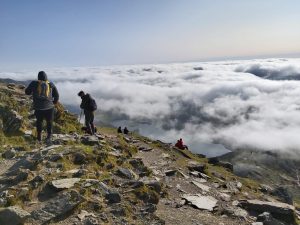
Training for the National Three Peaks Challenge
Now, training protocols for each individual will vary depending on their current fitness level.
For instance, a regular walker who keeps themselves in tip-top shape obviously isn’t going to need the same rigorous training plan as someone who lives a more sedentary lifestyle.
Only you know how fit (or unfit) you really are. You’ll need to be truly honest about how much work you’re going to have to put in to get ready for the Three Peaks Challenge.
While I can’t share a ‘one size fits all’ cookie cutter training plan, I can offer some tips (as someone who’s completed the challenge) to help guide your training and ensure you get in proper Three Peaks shape!
Note – If you’ve any health/medical conditions which could hinder your performance during the challenge, always consult a doctor or physical therapist for professional advice.
Hill walking
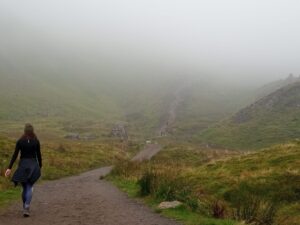
They say the best way to get good at something is to simply practice doing it – hill walking is no different.
If you’re already a competent walker, jumping right in the deep end and tackling some big mountains is a great way to get those miles under your feet.
Perhaps the best preparatory walk is the Yorkshire Three Peaks, which a few of us completed around 2 months before the national challenge.
For those less accustomed to hiking, start by attempting smaller hills and gradually work your way up to the more challenging climbs. This will help build both your endurance and confidence.
In an ideal world, it’d be worth climbing the individual Three Peaks before the challenge if possible.
It not only works your fitness, but also gives you experience in following the routes (Scafell Pike can be particular tricky to maneuver).
Unfortunately, I didn’t get to climb Scafell Pike before the big day, but I did manage to squeeze in Ben Nevis around a month prior and I’ve already climbed Snowdon several times over the years.
Top tip – Time your hill climbs so you can gauge what pace you’re able to walk at. Three Peak timings can be found here.
Get used to wearing a backpack
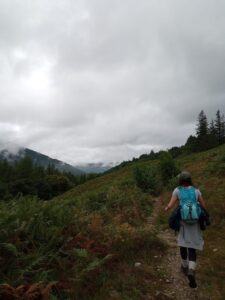
Getting accustomed to carrying a full backpack is key if you want to be comfortable during the challenge.
On the day of the Three Peaks, your bag will contain clothing, food, equipment and up to 4 litres of water – all which need to be lugged up and down each mountain.
Familiarising and strengthening your body by carrying this on a regular basis will also help in minimising shoulder & back discomfort during the challenge.
Gym workouts
A good supplementary activity to all the walking you’ll be doing is clocking quality hours in the gym.
Full body resistance training is ideal. Strengthening your legs, core and upper body will pay dividends when traversing the peaks; keeping you stable and sturdy throughout.
HIIT (High-Intensity Interval Training) at the gym is also amazing for increasing lung capacity in a shorter time than regular cardio training would.
HIIT involves alternating short bursts of intense exercise with periods of recovery. For example, going all out on a sprint for 20 seconds followed by a slow jog to recoup. Rinse and repeat.
These kinds of workouts are best used on gym equipment such as the treadmill, bike or rowing machine – guaranteed to have you working up a sweat in no time at all!
Mixing up long hikes with HIIT is a sure fire way to get your cardiovascular endurance primed for the Three Peaks challenge.
Sports and other physical activities
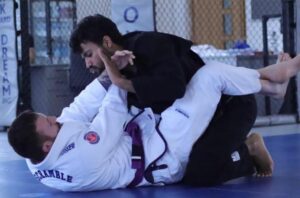
Similarly, any other sporting or physical activities that get the lungs working will aid in preparing you for the big day.
I’ve practiced Brazilian Jiu-Jitsu for several years now, and I still continued to train at the dojo 2-4 times a week during the run up to the Three Peaks Challenge.
These regular sessions during the week only further increased my stamina and made a nice change of pace from the long weekend hikes.
Whether you enjoy tennis, rock-climbing or ultimate frisbee – if it gets your heart racing then keep doing it!
Shed those excess pounds
While there’s by no means a ‘perfect’ bodyweight to attain for the Three Peaks Challenge, it’s certainly worth shedding a few pounds if you’re carrying a bit of extra timber!
The less excess fat you have means the less weight you’ll be carrying all the way up and down each peak.
Being too heavy can also take its toll on your knees with the constant impact caused by the steep inclines and declines.
Eating the right quality & quantity of foods while consistently sticking to an exercise plan for the challenge should have any extra weight melting off you quite naturally.
Use the car less
Despite owning a car, I make a conscious effort to walk whenever possible.
I regularly clocked 7,000-10,000 steps per day in the run up to the The Three Peaks Challenge, often just from simple choices like walking to the gym or into the town centre and back instead of driving.
These little sacrifices might not seem much on their own, but over the weeks and months the miles soon add up to a significant distance.
Rest days
While consistent training is without doubt important, it’s also necessary to make sure your body isn’t overworked.
This isn’t an excuse to slack off mind you! But don’t be afraid to take off-days and let your body recuperate.
This is particularly crucual in the final weeks leading up to the challenge – be sure to taper down the intensity so come the big day you’re feeling fresh and raring to go.
Weekly training routine for the Three Peaks Challenge
I personally didn’t follow a specifically designed training plan for the National Three Peaks Challenge, so I’m not really able to share any kind of structured routine.
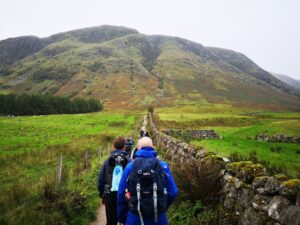
I’m already a pretty active person – I simply continued with my current physical activities and made sure to get in a good hill hike most weekends.
A typical week for me would look something like the following:
Monday: Gym + short walk
Tuesday: Brazilian Jiu Jitsu (or sporting activity)
Wednesday: Rest day + short walk
Thursday: Brazilian Jiu Jitsu (or sporting activity)
Friday: Gym + short walk
Saturday: Big hike
Sunday: Rest day or Brazilian Jiu-Jitsu
On most days I’d also accumulate my step count by simply choosing to walk rather than drive whenever feasible.
The short walks mentioned above were just low intensity evening strolls I’d go on with my girlfriend after work. These were in the local neighbourhood, usually taking no longer than an hour.
Sometimes I’d also swap a gym sessions in place of a run outdoors. I wouldn’t run crazy distances, mostly just sticking to 5-10 kilometers for time.
The longer weekend hikes would vary in order to keep things fresh.
We’re spoilt for choice when it comes to hill walks in the north of England, so we always had a new challenging hike to tackle!
If I ever felt too worn out, I’d just swap one of the workouts during the week with a rest day.
Conclusion
There are no fancy shortcuts when it comes to getting in Three Peaks shape.
The training isn’t really complicated, it just requires a healthy dose of discipline and hard work.
Training regimes will vary based on each individual’s fitness level, but successful preparation will largely involve consistent hill walking and exercising in order to get ready for challenge day.
Walk those hills. Clock in those gym sessions. Get that diet in check. Complete the challenge 👊
More resources
For more walking challenge inspiration, why not check out our ‘Top 10 Walking Challenges (UK) For Daring Hikers’ blog post?
Happy walking 🚶🚶