


Did you know that the average person exhales around 1 whole litre of water each and every night just through breathing?
While an interesting fact, this kind of moisture build up can quickly become a real nuisance for us campers…
What is condensation?
As defined by National Geographic:
“Condensation is the process where water vapor becomes liquid. It is the reverse of evaporation, where liquid water becomes a vapor. Condensation happens one of two ways: Either the air is cooled to its dew point or it becomes so saturated with water vapor that it cannot hold any more water.”
The dew point is simply the temperature at which condensation occurs.
A great example can be seen by breathing onto a mirror, as the water vapour from your exhale will condense and turn the mirror foggy.
Or for all my fellow glasses wearers – condensation is also the culprit which keeps causing our lenses to fog up!
How to stop condensation in a tent
As the weather gets cooler into the night when we’re camping, moisture in the air of the tent turns into condensation and gathers on the walls since it’s nowhere to escape.
So how do you stop a tent from getting condensation?
Now I don’t want to be the bearer of bad news, but tent condensation isn’t something which can ever be totally stopped…
Tents these days are predominantly made from polyester, great for its lightweight portability and waterproof capabilities, but not very breathable in the great outdoors.
Nevertheless, there are still a number of steps you can follow which will considerably reduce it.
Hopefully by trying the below tips, you can decrease tent dampness and have a comfortable and enjoyable next camping adventure!
👇👇
Tips to reduce condensation in your tent
1) Ventilation
Having proper airflow in your tent is absolutely key if you want to avoid moisture build up.
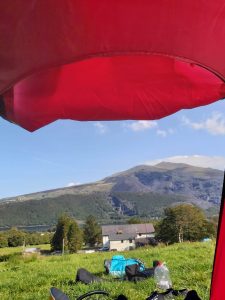
Inspect your tent for any upper and lower vents you can open and ensure none of your gear inside is blocking them.
If the weather allows for it, it’d also be worth opening up your tent doors, although the mesh compartment can remain zipped up.
2) Pitch in the right location
Similarly, it’s good to position your tent in the right wind direction to maximise airflow coming into your tent.
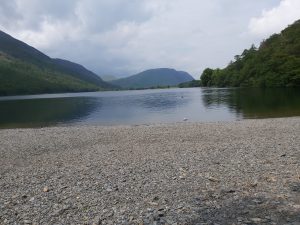
Try to pitch on higher ground (if safe to do so) and avoid any hollows where air can sink. To keep moisture to a minimum, you’ll also want to set up camp away from water.
While pitching near lakes, rivers & streams can be very picturesque, the proximity to the water will only increase your issues with condensation.
Water sources are also a hotbed for insects. Getting constantly bitten is not very fun! If you can’t avoid camping by water, be sure to at least bring some quality insect repellent spray.
Top tip – Try to pitch under trees if possible (and safe). The radiative heat will help stop the tent walls cooling down as much.
3) Bring a ground sheet
While tall, lush grass looks great, it also holds a lot of water – especially in the UK where rain is an all too common occurrence.
It’s particularly prevalent in valleys, since the cool air that’s built up in there only encourages even more ground moisture.
To keep the dampness and humidity down, once you’ve picked the ideal pitching spot it could also be worth laying down a ground sheet to act as a buffer between your tent and the water on the damp ground.
4) Don’t cook inside
Cooking produces a LOT of vapour, so it’s always better to cook outside if you’re able to do so.
If the weather isn’t great and you need to cook inside, be sure to keep your cooking apparatus as close to the door as possible.
Not only is this safer, but it also allows space for the moisture to exit the tent rather than build up inside.
5) Leave wet gear outside the tent
If you’re clothing is wet when you arrive back at your tent, don’t take them off and leave them to dry inside.
As clothes dry out, they release condensation. Letting them sit in the tent is only going to significantly increase the moisture levels!
A great alternative is to store your wet gear in a dry pack. They’re relatively cheap and can save you a lot of hassle.
6) Don’t touch the sides
Pressure applied to the walls encourages water to seep through. While it can be difficult if you’re in a small tent and strapped for space, try to ensure all your clothing, equipment and bags are well away from the walls of your tent.
If we’re pitching in close proximity to our car, anything we don’t always need sitting in our tent gets thrown in the boot. It really helps to save space when we’re camping in our cramped two man tent!
7) Don’t use a heater
Now, being cold in your tent is a sure fire way to spoil your camping trip. Nevertheless, bringing a heater is by no means the best solution.
Increasing the temperature inside the tent will only increase water vapour. Warm air not only supports more moisture, but leads to even more perspiration and evaporation.
Instead, be sure to pack a quality sleeping bag, warm clothing and extra layers to throw on when the coldness sets in.
8) Bring a microfibre towel
No matter how meticulous you are, unfortunately you’ll never fully stop condensation.
That’s why it’s always handy to bring along a quality microfiber towel and give your tent a regular wipe down. This will keep the moisture levels in check and stop it from building up and becoming a nuisance.
9) Dry your tent after use
Looking ahead, you should think about drying down your tent before packing it away to keep dampness to minimum for your next trip.
Leaving a wet tent crunched up in its bag without drying it out is certainly going to increase condensation issues for your next adventure.
When we arrive back home after one of our camps, we always hang up the tent in the house, crack open the windows and leave it to air out for a good while.
Has my tent leaked or is it just condensation?
Condensation is often mistaken as a leaky tent.
Any half decent tent is highly waterproof, making it very unlikely that water will make its way in.
A clear sign of a genuine leak would be if water keeps pooling in the same spot, otherwise it’s most probably a condensation issue.
Follow the tips in this blog post and I’m positive you’ll be able to significantly reduce your moisture problems!
Happy camping ⛺⛺
Further resources
For ideas on future camping trips, be sure to check out our recent adventures in Buttermere, Anglesey and Snowdonia.
We also found this cracking little video on tent condensation which is worth a watch: