

You really will struggle to find a better hike in the UK than the Yorkshire Three Peaks Challenge.
Spanning a whopping 25 miles, this legendary circular trail is located in the Yorkshire Dales National Park and involves summiting the three major peaks of Pen-y-ghent, Whernside & Ingleborough.
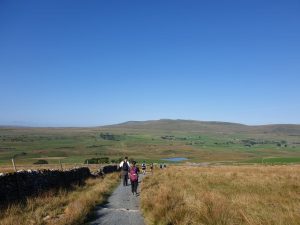
With each of these being formidable hill climbs in their own right, many visitors choose to space this legendary trail out over multiple days.
For those completing the Yorkshire Three Peaks Challenge however, you’ll be tasked with tackling all three in under 12 hours!
As a veteran hill walker and someone who’s completed the Yorkshire Three Peaks Challenge in under 9 hours, safe to say I know a thing or two about getting in shape for the task at hand.
I won’t lie, the challenge can be pretty gruelling. For many of you reading this, some degree of training beforehand is most likely going to be required.
However, the glorious countryside views you enjoy along the way, plus the sense of achievement you’ll enjoy after crossing the finish line, makes the struggle more than worth it.
Up for the challenge? Then read on to discover how to train for the Yorkshire Three Peaks 👇👇
The Yorkshire 3 Peaks Challenge map
Do I need to train for the Yorkshire 3 Peaks?
For experienced hikers and folks with a good baseline fitness, you may not have to undergo any specific training to take on the Yorkshire Three Peaks Challenge.
For couch potatoes and those not accustomed to longer walks however, I’d recommend AT LEAST 8 weeks of consistent training to build your body & mind up for the challenge.
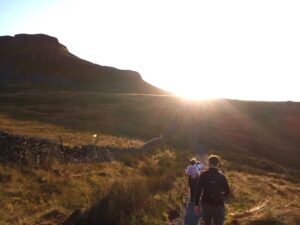
A good way to check your baseline fitness would be to try summiting just one of the Yorkshire 3 Peaks and timing your climb.
If you can tackle the mountain in a respectable time period and the hike has not taxed your body too much; then you’ll most likely have the ability to tackle the full route.
I decided to take on this trail at speed as training prep for my National Three Peaks Challenge later in the year. Let’s just say I certainly underestimated how much this hike would push me…
In some ways, I’d argue that it was even harder than the National 3 Peaks!
While the National 3 Peaks Challenge involves climbing much higher altitudes, at least you get a lengthy rest as you commute between each mountain!
In comparison, the Yorkshire 3 Peaks is one big constant slog.
Totalling the length of a marathon and involving a mammoth 1585m (5200ft) of ascent, it’s no wonder that this challenge takes so many by surprise.
Training for the Yorkshire 3 Peaks (expert training tips)
While there’s no need for a super-specific cookie cutter training plan, there are a number of helpful tips I’d recommend when putting in training for this challenge.
You know your body better than anybody else, so you’ll need to give a truly honest assessment about your fitness level and determine how much training you need to adequately prepare.
By no means do you need to follow every single point below, but hopefully they can help inform and even inspire your training sessions before the big day.

Get walking up those hills
Let me preface this first tip by sharing a fun fact…
By the time you’ve completed the Yorkshire 3 Peaks Challenge, you’d have hiked the entire height of the Eiffel Tower more than five times over.
Now that’s a lot of incline!
There’s no getting around it, to best prep for this challenge you’re going to have to simply start climbing plenty of hills!
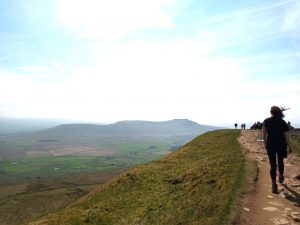
For the more capable walkers amongst you, I’d recommend immediately jumping in the deep end and tackling the biggest hikes and peaks you can find. Really start getting your body used to the steep & rocky terrain.
If you’re more of a beginner, kick off your training regime with shorter distances you feel comfortable completing and try to gradually increase your distance and elevation each week.
Trust me, the body is a wonderfully adaptable machine and quickly acclimatises to whatever stimulus you regularly subject it to. You’d be surprised at how much progress you can make in a matter of weeks!
However, always keep in mind the old adage ‘slow and steady wins the race’.
Start your training well in advance and make incremental increases to your distances, being sure to not push for too much too soon.
Adding just a mile or two each week soon adds up to quite the distance over a couple of months!
Try your hand at rucking
Rucking is most simply defined as walking with weight in your backpack.
Long used as an effective training tool in the military, it really is one of the most effective methods for upping both your strength & stamina for hiking.
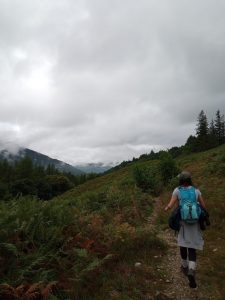
Top tip – To make sure you bring all you need, be sure to check out our ‘How To Pack Your Rucksack The RIGHT Way’ blog post!
The extra weight can quickly start to take a toll on your shoulders, back and legs over long distances, so it’s definitely a good idea to get your body comfortable in carrying those extra loads.
While you’re clocking up training miles on the trail, try mimicking the same weight you’ll be carrying in your rucksack on challenge day, either by packing all the equipment you need or by finding a suitable weighted alternative.
For those wanting to learn more about the joys of weighted walking, I’d suggest reading through this top notch rucking guide devised by the guys over at TrekSumo.
Get used to all weather conditions
The weather in England is notoriously unpredictable, with rain unfortunately being an all-too common occurrence.
Bearing this in mind, it really is a toss-up as to what climate you could be faced with come challenge day.

It obviously goes without saying that safety is paramount, so don’t be hiking in dangerous conditions. But that isn’t an excuse to swerve a planned hike just because the sun hasn’t reared its head!
Not only will this toughen you up, but it’ll also give you experience in knowing what clothing & equipment you’ll need depending on the weather you’re faced with.
Build your strength at the gym
Supplementing your walks with strength training in the gym can also significantly level up your hiking ability.
Not only does it keep training varied & fresh, but by strengthening all your key muscle groups you’ll find that your body is more sturdy & stable throughout your hiking ventures.
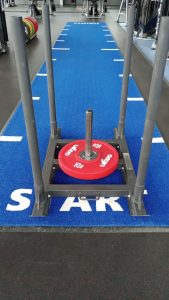
You don’t need to get super complex or anything. Just sticking to big basic movements such as squats, lunges, deadlifts, push ups and pull ups will give you the most bang for your buck.
Nevertheless, be sure to keep in mind that hill walking should still always be your primary focus.
For instance, if you’ve got a big hike planned on Saturday, don’t absolutely fry your legs the night before at the gym so that it impedes your ability to hike. Common sense really!
Start running
Alternatively – if the gym just isn’t your thing – running in the Great Outdoors is another fantastic & time-efficient way of building your endurance and leg strength.
Distance running is straight forward enough, simply jogging for a set length at a steady pace.

Another invaluable form of running I’ve recently fallen in love with however is HIIT.
Short for ‘High-Intensity Interval Training’, this mode of running involves alternating short bursts of intense effort with brief periods of recovery.
For example, going all out on a sprint for 20 seconds followed by a slow jog to recoup. Rinse and repeat.
A super effective way of increasing lung capacity in a shorter time than regular cardio training, if you’re a particular glutton for pain, you could even try your hand at hill sprints!
I feel woozy just thinking about it…
Sports and other physical activities
Likewise, even when you’re not officially ‘training’, its always good to keep the body active by doing the things you love!
For instance, I love Brazilian Jiu-Jitsu. A great way to further develop my fitness, even when I’m training for a hike I’ll be sure to get to the dojo at least a couple times a week.

We all have sports or physical hobbies we enjoy doing, and just because we’re training for the Yorkshire 3 Peaks doesn’t mean we have to put a pin in them.
Whether that’s tennis, mountain biking or ultimate frisbee, if it gets your lungs huffing and puffing then keep at it!
Ditch the car when you can
Another fantastic little change you can make to improve your fitness – why not start opting to walk instead of taking the car whenever possible?
In the lead up to the Yorkshire 3 Peaks Challenge, I was totalling 7,000-10,000 steps some days, often just from simple choices like commuting some of the way to work on foot.
Whether that’s strolling to the local shops, walking to the gym or visiting a family member a mile or two down the road; these little journeys quickly add up over the weeks and months.
Get that diet in check
While there’s by no means a ‘perfect’ weight to attain for the Yorkshire 3 Peaks Challenge, it’s always worth dropping a few pounds if you’re carrying a bit of extra timber!

Now I’m not saying you need to meticulously calorie count, but it is essential to properly fuel your body to maximise your training and recovery.
Plus, the less excess fat you have means the less weight you’ll be carrying up and down each peak.
Being too heavy can also take a toll on your knees with the constant impact caused by the steep inclines and declines.
Your weight isn’t something you need to overthink however. By consuming the right quality & quantity of foods while sticking to your exercise plan should have any extra weight melting off you quite effortlessly.
*As per the NHS website, the recommended daily calorie intake is 2,000 calories a day for women and 2,500 for men, though this can increase dependent on levels of physical activity.
Rest and recover
Rest should be an essential part of any training plan. Make sure to incorporate rest days to avoid injury and to allow your muscles to fully recover.
This isn’t a free pass to slack off mind you! But not taking time to recoup can quickly lead to physical & mental burnout.
This is particularly crucial in the final week leading up to the challenge – be sure to taper down the training so come challenge day you’re feeling fresh and eager to go!
Weekly training schedule for The Yorkshire 3 Peaks
As previously mentioned, everybody is coming into this challenge at a different level of fitness so there isn’t a generic training plan that I can share.
However, for those who may find it interesting, I thought it’d be worth sharing one of my weekly training schedules when leading up to a hiking challenge.
I’m already a pretty active person – so I usually tend to just continue with my current physical activities and make sure I pick a challenging hill hike or two during the weekends!
Weekday |
Activity |
Monday |
Gym & short walk |
Tuesday |
Sporting activity |
Wednesday |
Rest day & short walk |
Thursday |
Sporting activity |
Friday |
Gym + short walk |
Saturday |
Big hike |
Sunday |
Hike or rest day |
The short walks mentioned above were just low intensity evening strolls I’d go on with my wife after work. These were in the local neighbourhood, usually taking no longer than an hour.
I’d also clock a decent amount of steps through the week by opting to walk rather than drive whenever possible (practice what you preach!).
Sometimes I’d swap a gym session in place of a run outdoors and the longer weekend hikes would always vary in order to keep things fresh. Plus, if I ever felt too worn out, I’d just swap one of the weekday workouts with a rest day.
Conclusion
The Yorkshire Three Peaks is a fantastic challenge to tackle, though you may need to do a couple months of training if hiking isn’t your strong suit.
The training isn’t really complicated however, it just requires a healthy dose of discipline and consistency!
Hopefully the tips and weekly template highlighted above can help guide your own training.
Finally, if you’re unsure about anything regarding the Yorkshire Three Peaks Challenge or have any specific questions you’d like to ask, please feel free to pop me an email. I’m happy to help where I can.
More resources
Yorkshire is teeming with outdoor wonder.
If you’re interested in exploring more of ‘God’s own county’, then be sure to check out our post listing the ’11 BEST Walks In Yorkshire’.
Likewise, for more challenge inspiration, why not read through our Top 10 Walking Challenges In The UK article?
Happy walking 🚶🚶